

School Game
Screenshots


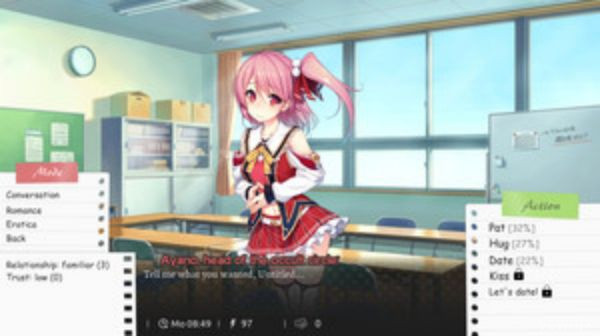
School Game Game
Busy days at work or school sometimes leave you wanting a light story game you can dip into for a few minutes at a time. A school-life simulator with role playing elements fits well for late-night sessions or quiet weekend breaks when you just want to follow a character’s routine and make a few key choices.
School Game focuses on that day-to-day feeling of being a student, mixing schedule management, character stats and relationship building. Sessions can stay short, but there is enough depth that decisions about how you spend each in-game day actually matter over time.
School Game Game Features
Character development → Build up stats such as intelligence, strength or charisma to change how school events and conversations play out.
Daily schedule planning → Choose how to spend each in-game day, from attending classes and clubs to hanging out or working part-time.
Branching events → Different actions and stats unlock unique scenes, giving multiple paths through the school year.
Relationship system → Interact with classmates and teachers, improve affinity and unlock new dialogue and story routes.
Progress saving → Continue your school year across many short sessions, picking up right where you left off.
School Game Game Highlights
Often the most interesting part comes from juggling grades, money and social life so you cannot simply max everything at once.
Usually the game rewards paying attention to dialogue options, as small choices early on can open or close certain story branches later.
Sometimes the pacing slows down during routine days, which can be relaxing but may feel repetitive on older devices if loading takes a bit longer.
Just having a clear in-game clock and calendar makes it easy to track where you are in the term and plan ahead for exams or events.
Often players will experiment with different builds across multiple saves, trying a studious route one run and a more social path the next.
School Game Gameplay
1. Start of term setup: Create or adjust your character, check starting stats and get a quick feel for the school layout and key locations.
2. Managing each day: Pick where to go during each time slot, such as classroom, club room, gym or town, and watch how those choices affect stats or relationships.
3. Attending events: Trigger story scenes when conditions are met, read through dialogue and choose responses that fit the personality or outcome you want.
4. Balancing resources: Keep an eye on grades, money and energy; skipping study for too long can hurt exam results, while ignoring work leaves you short on cash.
5. Long-term progress: Play through weeks of in-game time, unlock new characters or areas, and eventually restart with different priorities to see alternate outcomes.
School Game Conclusion
School Game suits players who like slow-burn role playing rather than fast action, and who enjoy tweaking stats and schedules to see different story results. Short daily sessions work well, so it fits commuting, study breaks or quiet evenings when you want a school-life simulator that tracks your choices over time.










No comments yet. Be the first to share your thoughts!